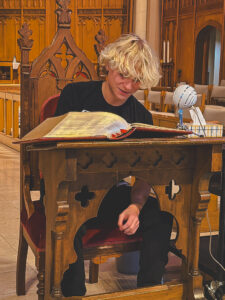
In the last couple of weeks, I’ve had the pleasure of returning from a ten-week sabbatical. I’m grateful to Bishop Bascom and the Council of Trustees for the opportunity and to my colleagues on diocesan staff for taking on a heavier workload while I’ve been away. The sabbatical didn’t involve anything truly extravagant, but it was a time to study, to dwell with Christ and my family, and to reflect on the blessings of life and ministry. It arrived at a perfect time in my personal/familial life and in the ministry I share with you in the diocese. “To everything there is a season,” and I’m blessed to have had time away in this season
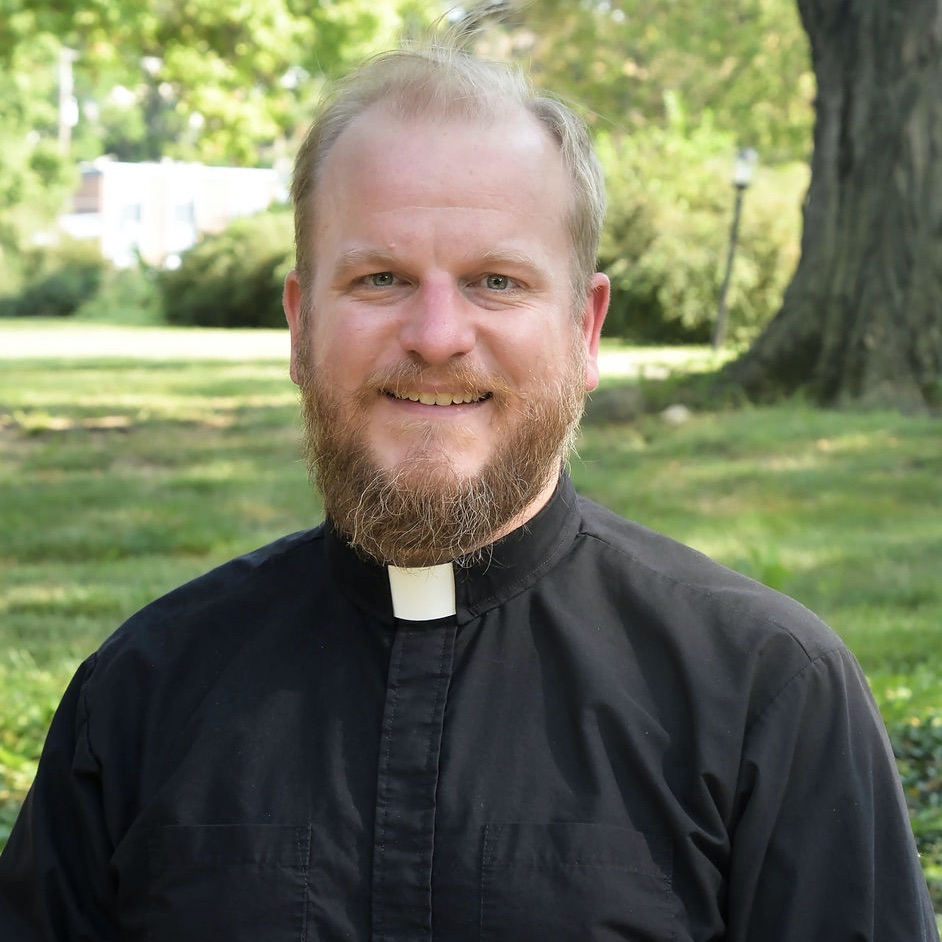
In the final weeks of sabbatical, I regularly caught myself seized with anxious thoughts about my return: Could I justify my time away? Have I read enough? Had I had enough deep thoughts? Had my spiritual life reached new levels of intimacy? Have I emerged with a transformed understanding of my call to service and ministry? Had I done what I needed to do to justify the time away and the extra work my colleagues had taken on?
On the penultimate Sunday of the sabbatical, the Holy Spirit met me in the lectionary, jostling me into reflection on my rumination:
“Vanity of vanities, says the Teacher, vanity of vanities! All is vanity.”
A reflection I heard at a retreat in May reminded me that הֶבֶל ‘hebel,’ is less our modern understanding of “vanity” and more like “vapor,” “smoke,” “emptiness.” As I heard a sermon on the passage at the end of my time away, I understood that my inclination to quantify my time away in books and deep thoughts was exactly what the author of Ecclesiastes warns us about: “I saw all the deeds that are done under the sun; and see, all is vanity/vapor/smoke/emptiness and chasing after wind.” The justification of time away undermines sabbath (and by extension sabbatical) as a gift from God. God mandated sabbath as a time of rest, full stop. In my worry about proving my sabbatical had been “worth it” to you, the bishop, and the diocesan staff, I risked turning a holy gift into vanity. In attempting to quantify a sabbatical, I risked sullying what I have received.
The high point of the time away was a family road trip out West. Having the opportunity to take a couple of weeks away from Topeka, we took advantage of a National Park Service program that gives free park admission to fourth graders and their families. We also decided to spend a few days in Las Vegas, where I had spent most of my early life before my father’s priestly ministry brought us to the Diocese of Kansas in the summer after my fourth-grade year, coincidentally the same age Eirnín was this summer.
We each had our own highlights from the trip, with highs and lows to share. Looking back at the summer while avoiding the self-justification endemic to humanity, I’m drawn to a single holy moment in California. Though I spent my early years relatively nearby, I had never visited Sequoia National Park on the east face of the Sierra Nevada Mountains. I can’t say I’d ever been drawn to the sequoias: big trees, big deal; however, as we made our plans, I felt a calling to make a Sequoia visit work. It is a beautiful Park and the first of our Parks that wasn’t predominantly desert. We enjoyed winding our way up the mountains and seeing our first sequoias. After hiking a bit in a different part of the park, we made our way to its heart to find “General Sherman,” the largest tree (by volume) in the world.
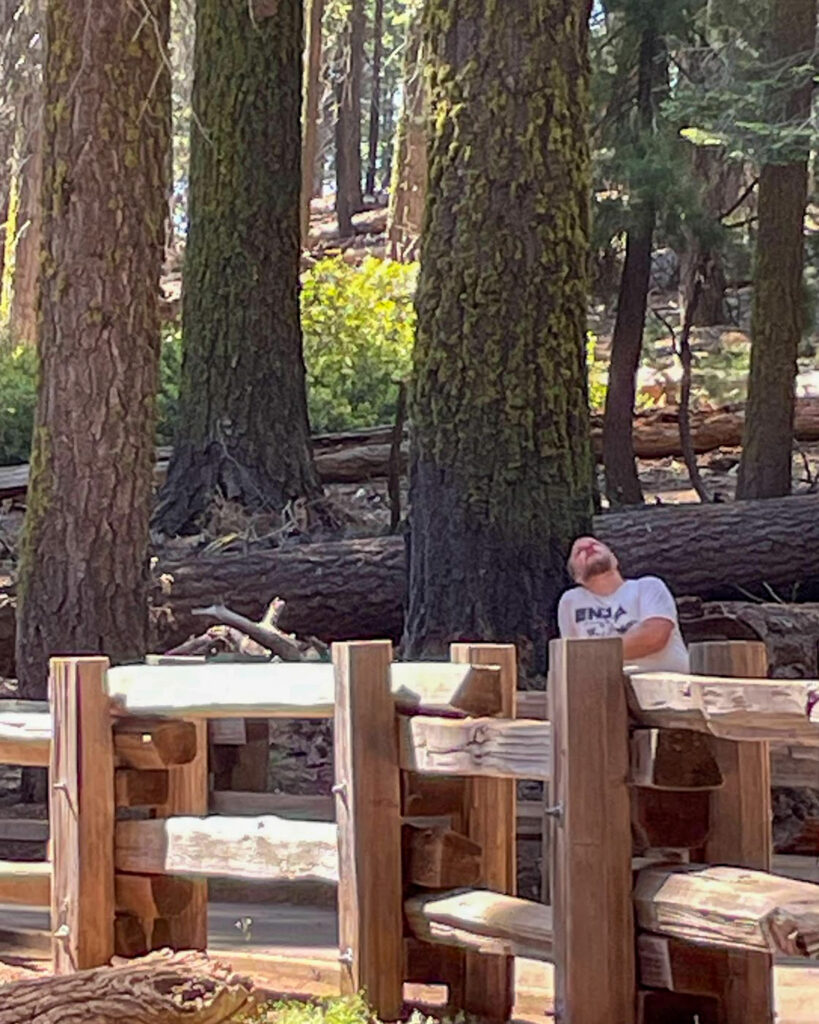
Sitting at the base of that massive 2,200-year-old tree with my family, surrounded by people from all over the world, I started to weep. “Awe is the feeling of being in the presence of something vast that transcends your current understanding of the world,” psychologist Dacher Keltner wrote in his 2023 book, Awe: The New Science of Everyday Wonder and How It Can Transform Your Life. The greatest privilege of my priesthood is to administer the awe-some mysteries of the Sacraments, serving Christ and his people by facilitating sacramental intimacy. The greatest privilege of my marriage is the awe-some unity I share with Michael as I fall more in love with her each day. The greatest privilege of fatherhood is the awe-some unconditional love and joy I feel at seeing and supporting Eirnín and York as they grow.
The gift of sabbatical and of tearful communion with hundreds of people at the base of a tree is the realization that the awe-some privileges of priesthood, marriage, and parenthood are always at risk of being diminished in my eyes, turned into הֶבֶל ‘hebel,’ “vapor” or “smoke.” The important power of regular rest and return to Christ’s presence in prayer and sacrament is the marginal, unscheduled space to realize how our self-justification-through-busy-ness-and-work undermines the awesome love God has for us and the awesome love we have for our various vocations: baptismal ministry, family, deep relationships to others, and the whole of God’s Creation.Can I quantify sabbatical? Can I justify it? I can’t, but I can say “thank you,” while I encourage you to seek your own regular Sabbath and wonderful awe that awakens you to the “smokiness” of your own self-justification.
by the Rev. Patrick Funston, Canon to the Ordinary
 835 SW Polk St.