by Tim Bascom
At 7 am, they come out of the cafeteria of the diocesan guest house and climb onto a bus, which winds its way out of the bustling streets of Nakuru—second largest city in Kenya—climbing north from the tan savannah into the green mountains until, an hour-and-a-half later, they reach the town of Mirangine and the lumbering vehicle eases through a gated entrance onto the grounds of a one-story clinic with a dozen treatment rooms.
Within an hour, they have transferred ten suitcases of medicine off the bus roof into a makeshift pharmacy, unpacking and organizing. They have labelled all the examining rooms by names of attending doctors or dentists. They have set up five or six triage stations under a large tent in front of the clinic. And they have begun to receive people who have checked-in at the registration table, approaching from a long column that extends out of the compound onto the rutted road.
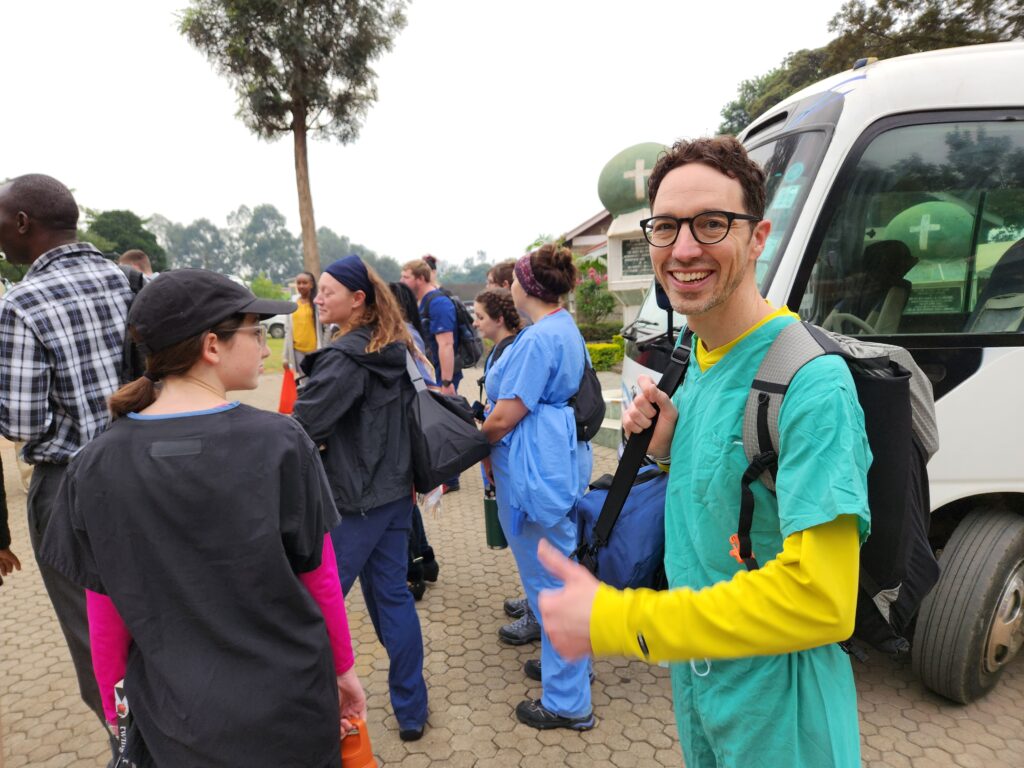
These medical workers from Kansas are fighting jetlag, and they were up late last night, grouping medicines that were carried in their luggage then repacking them into smaller, more convenient containers. They are only able to slip away for 15 minutes at midday to eat a sandwich from the tailgate of a van. They expect to be done by 4 pm, but they don’t complain as they push on until 6:00 pm and then 8:00, determined to care for as many as possible.
By the end, they have treated nearly three hundred people, some who have walked five miles in hopes of relief. They have cared for a teenage girl with an eye so infected that it could threaten the orbital bone. They have helped countless children with deworming treatments. They have extracted dozens of compromised or rotting teeth. They have cared for a baby with acute respiratory failure, so dire that calling an ambulance was not an option and the infant had to be raced to a hospital by private car.
This is the work of one of two K2K (Kansas to Kenya) teams that are organized by members of the Episcopal Diocese of Kansas, traveling from Kansas to Kenya each year. While the other team tackles community projects, such as helping to plant trees at a woman’s shelter or to facilitate a women’s conference in a Maasai village, the medical team spends six days providing intensive, free healthcare to needy Kenyans at designated clinics across Nakuru Diocese, hours to the west of the national capitol, Nairobi.
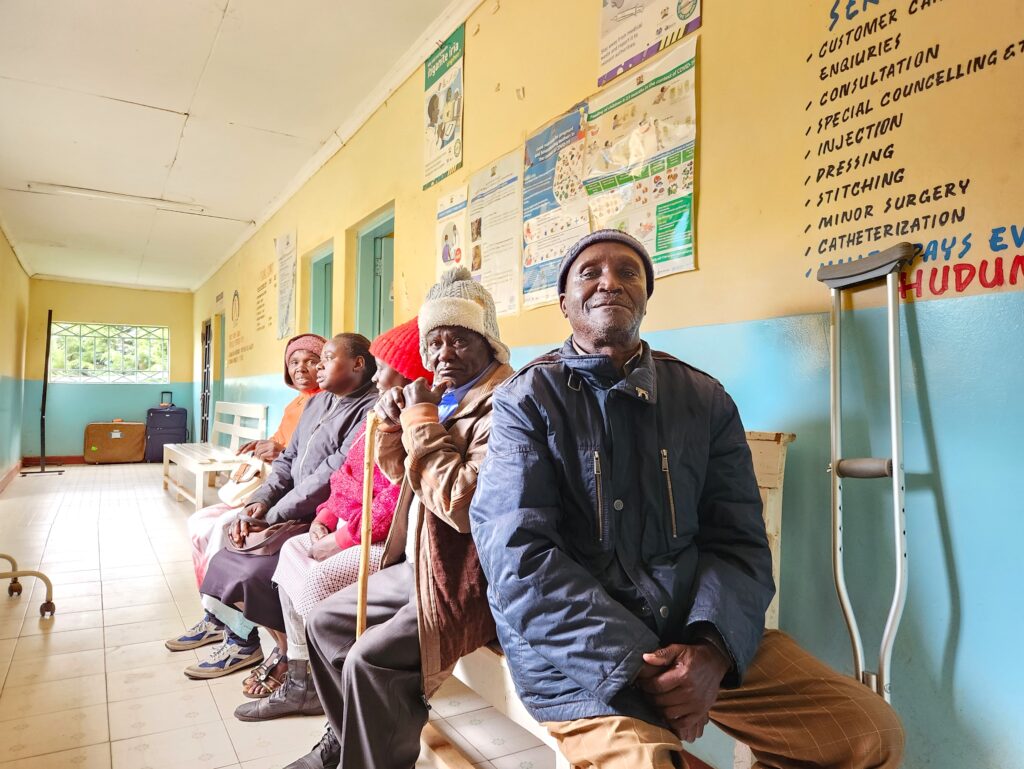
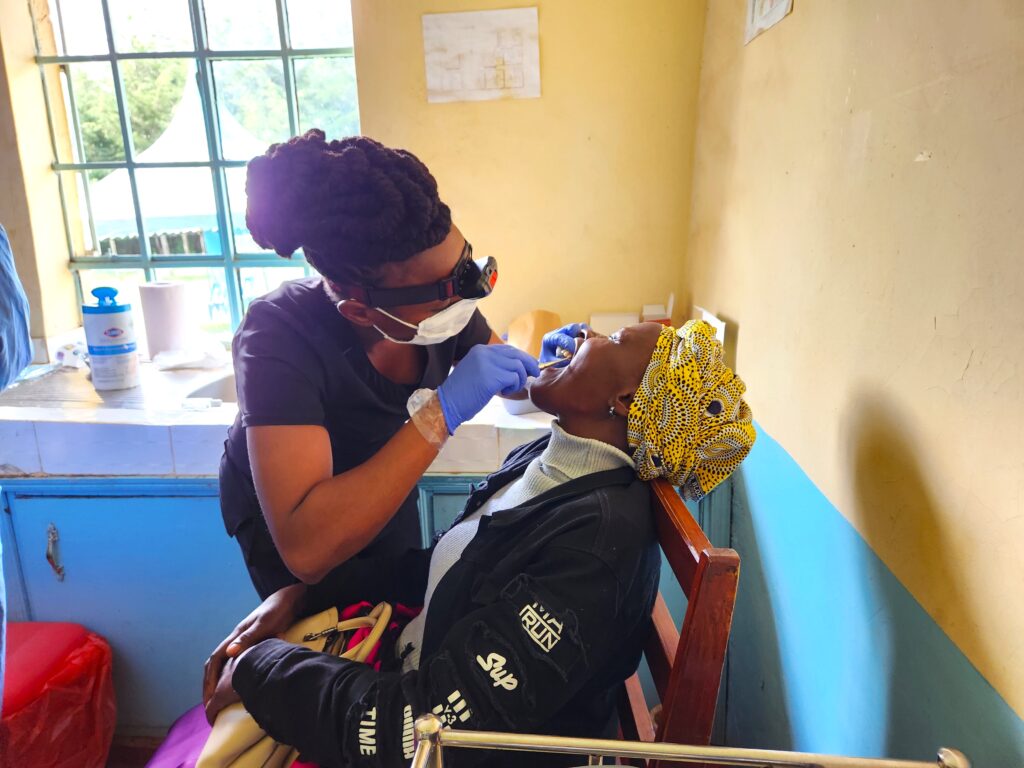
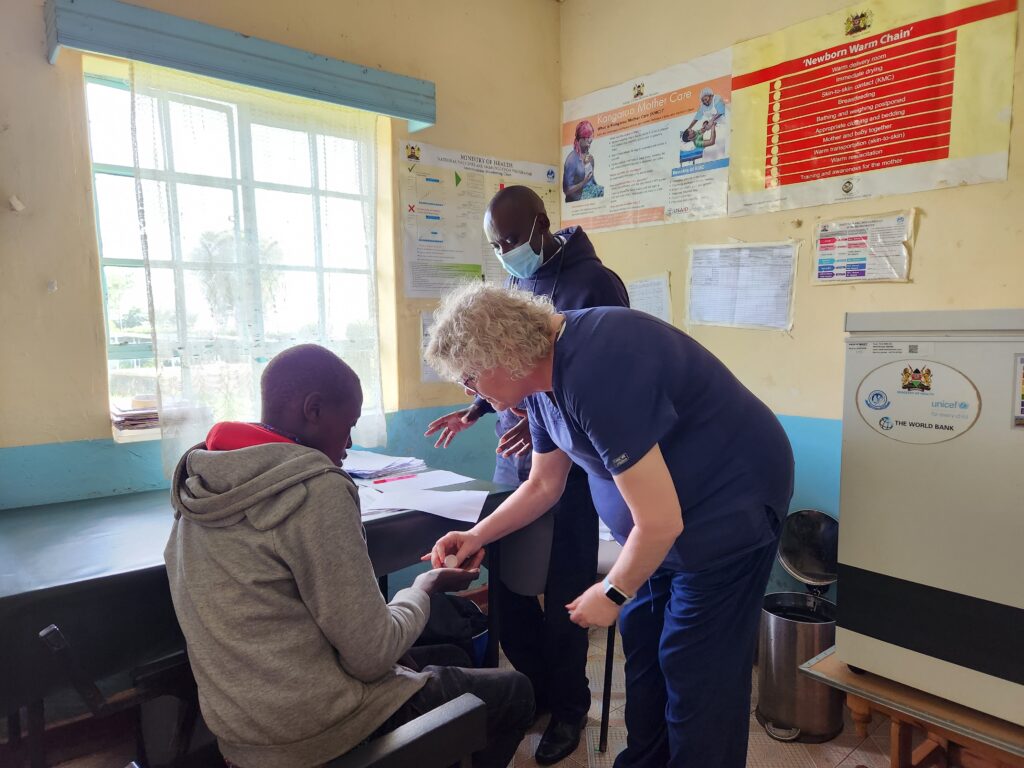
This June a particularly large group of medical workers (doctors, nurses, dentists, pharmacists, and even a helicopter EMT) came from Lawrence, Kansas City, and Wichita. They were joined by Kenyan physicians, pharmacy students, and interpreters, creating a team of fifty eventually. Each day they woke early and traveled by bus to a selected clinic, where they treated approximately three hundred patients, giving them free medical assistance. They prescribed and distributed free antibiotics and painkillers. They distributed free reading glasses. They also diagnosed patients with severe orthopedic or intestinal ailments, advising whether they should seek more intensive treatment, including surgery.
In 2006, K2K was begun by Dr. Steven Segebrecht, who serves today as a deacon at Trinity Episcopal Church in Lawrence, and by Bishop Dean Wolfe in consultation. After Dr. Segebrecht made an exploratory trip, the annual medical mission began, and it has been providing this sort of free medical treatment ever since, halted only by the pandemic. Pharmacist Pat Parker and retired businessman Joe Bob Lake act as Co-Directors now, and Diane Kruger, an RN who is also a deacon serving at Trinity Episcopal Church in El Dorado, was one of two 2023 team leaders. Kruger has been so transformed by past experiences with the medical team of K2K that she has returned 14 times now. In fact, her daughter, a Physician’s Assistant, has now come three times, and her son-in-law joined the team this year.
When asked why she keeps coming back, Kruger says, “Because the needs of basic medical care are so great that when I ask God what work he has for me to do, I am pointed to small villages in Kenya.”
As for the hopeful patients who arrived at that clinic in the mountain town of Maringine, many were aware that this was the return of the K2K medical team after three years of COVID cancellations, and they voiced thankfulness. On multiple occasions, people blurted out, “Where have you been? We are so glad to see you again!”
 835 SW Polk St.