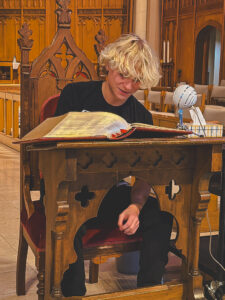
At a recent spiritual low point, I wandered over to Grace Cathedral’s Mary Chapel for some silence and prayer. The intimacy of the chapel is a wholly different vibe from the majesty of the cathedral nave, but I find it a place of comfort built over years of memory and meaning: from nights spent on the floor as a teenager through diocesan staff eucharists through semi-annual ordinand retreats. Seeking comfort in a comfortable place, I prayed for a greater awareness of the Holy Spirit’s comforting presence with me.
“Comforter” is the King James Version’s preferred translation of παράκλητος, “Paraclete,” the word Jesus uses when he promises the ongoing presence of the Holy Spirit after his death and resurrection. Paraclete literally means “one called alongside” and in Jesus’ time, paracletes were legal advocates, lawyers. Thus, Comforter makes sense as a translation, not in the doting/coddling/soothing sense of “comfort,” but in its Latin roots where fortis means “strong.”
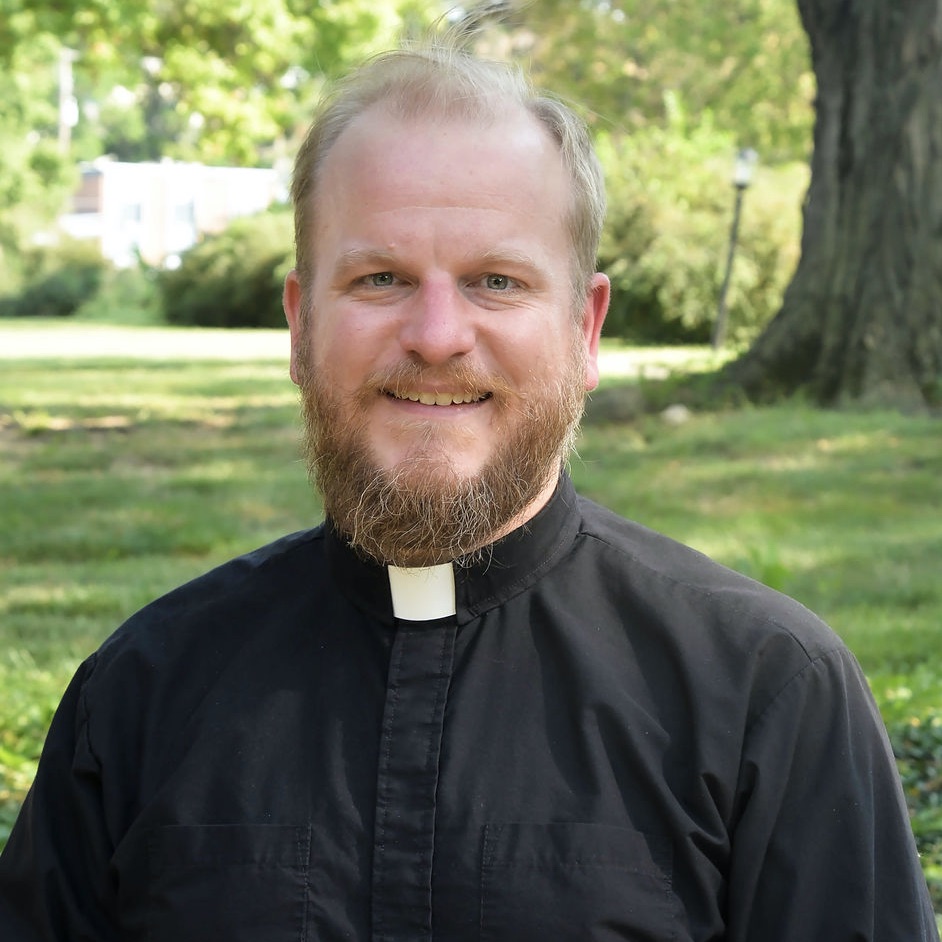
The Holy Comforter strengthens and builds us up in a variety of ways from helping us pray by “interced[ing] with groanings too deep for words” (Romans 8:26) to “sealing” us at Baptism (BCP 308) and “filling” us in Ordination (BCP533/545). But just like the “tough love” I get from a lawyer friend of mine, the Spirit’s “comfort” can be challenging.
While seeking comfort in the cathedral’s chapel, a man walked in with a camera. Following the requisite apologies for interruption and assurance that no interruption was experienced, he introduced himself as Dr. Nicholas Pumphrey, an Associate Professor of Religious Studies at Baker University. He was doing research on avian imagery in Christian scripture and art for an upcoming adult education program. During our conversation, he drew my attention to one of the several Mary icons in the chapel.
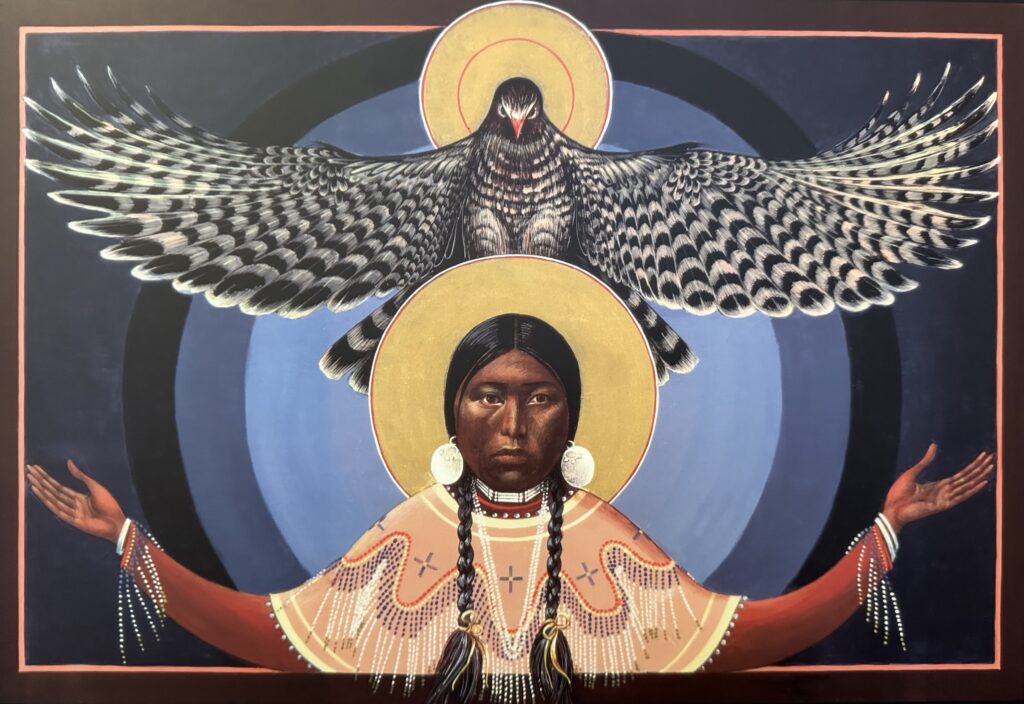
Lakota Annunciation I #47 was written by Fr. John B. Giuliani, a Roman Catholic priest and artist. Dr. Pumphrey pointed out that Fr. Giuliani made an interesting choice in depicting the Holy Spirit. Rather than a dove, “this is an American goshawk, are you familiar with them?” he asked, “They are aggressive and territorial raptors who regularly demonstrate a lack of fear of humans. Colleagues of mine who tag birds for study tell me, rather than flying away as soon as they are tagged (usual behavior for birds), goshawks attack.”
Culturally, Dakota/Lakota peoples see hawks as messengers (which makes sense within an icon of the Annunciation) and Dr. Pumphrey’s observation surfaced another recent broadening of my theology of “comfort.”
Through Jesus Christ our Lord; who rose victorious from the dead, and comforts us with the blessed hope of everlasting life. For to your faithful people, O Lord, life is changed, not ended; and when our mortal body lies in death, there is prepared for us a dwelling place eternal in the heavens. (Eucharistic Preface for Commemoration of the Dead, BCP 382)
At a recent Burial, I misheard the preface, “who rose victorious from the dead,” I thought I heard the Presider pray, “and confronts us with the blessed hope of everlasting life.” My colleague didn’t have a memory of the verbal slip, but I loved it and I’ve been chewing on it for months. Comfort, Confront, Goshawk, Dove. It all swirled in my spirit, comforting and confronting amid my distress there in the chapel, and I felt gratitude for the Holy Spirit’s presence with me. As we celebrate the season of Easter, we celebrate the comfort of Jesus’ resurrection. We glow in the knowledge that “we will certainly be united with him in a resurrection like his” (Romans 6:5). However, the gift of Christ’s resurrection is more than a balm for our own anxieties! The Resurrection’s comfort is a strengthening for purpose and ministry, for fearless evangelistic outreach and for proclamation of the Good News. As such, it is also a confrontation . . . the Resurrection’s “blessed hope of everlasting life,” means a transformed life now, and the Holy-Spirit-as-goshawk is more than ready to get in our faces when we aren’t living fearless lives in the hope of everlasting life. Alleluia! The Lord is Risen!
by Canon Patrick Funston
 835 SW Polk St.