St. Timothy’s Episcopal Church in Iola has spent 125 years making itself useful to the people beyond its red doors.
From its earliest days to its current congregation of about 15 regular worshippers, St. Timothy’s has continued to evolve.
The church will celebrate its 125th anniversary at 10 a.m., Sunday, with a service designed to reach back to the congregation’s beginnings and a gathering that welcomes former members, current parishioners and the wider community.
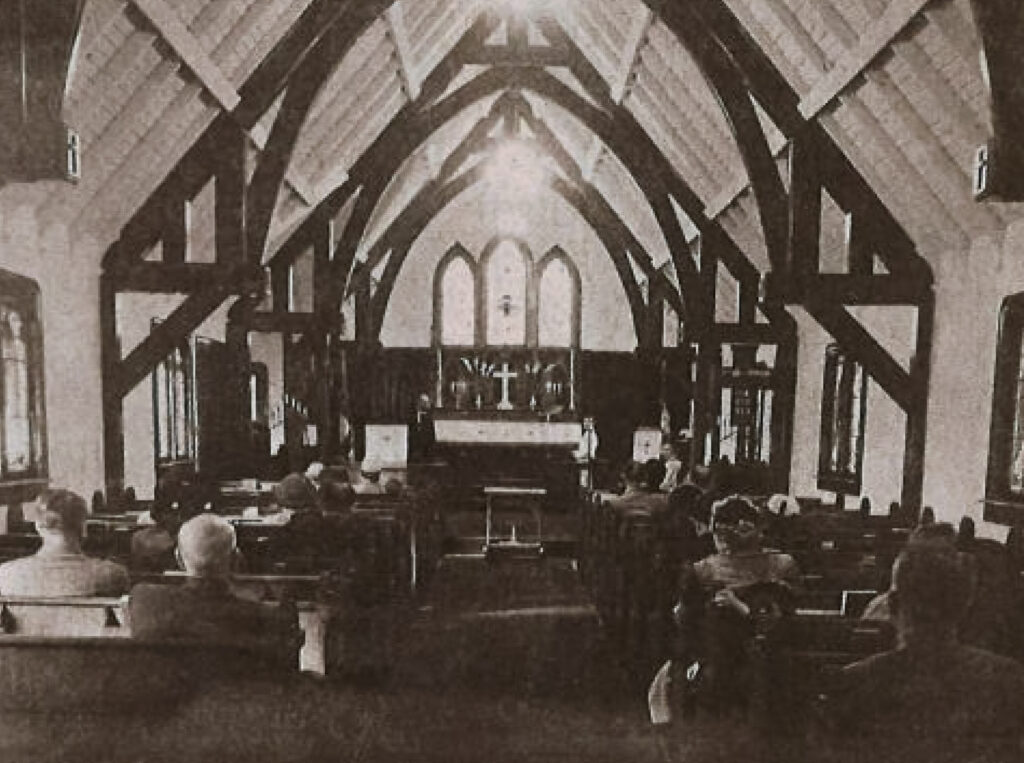
Before the church erected its building at 202 S. Walnut St. in 1901, church archives dating to at least 1888, document a congregation that moved from place to place, with notices indicating where members would gather each week.
Though today’s congregation is considerably smaller than it once was, its members say the heart of St. Timothy’s remains much the same.
“We realize how important it is to help out everybody in the community in any way we can,” Deacon Oliver Bunker said.
The 125th anniversary is about more than marking the age of a building, it’s about remembering the people who built the congregation, those who kept it going through changing times and the people who continue to believe it has a place in Iota’s future.
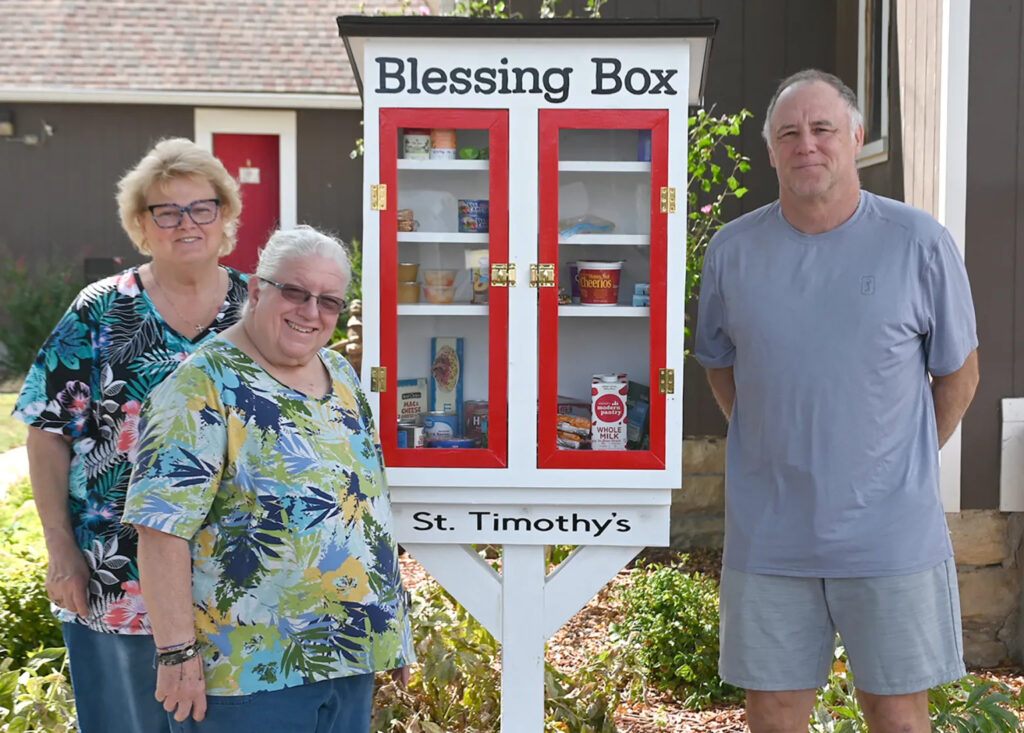
Bunker, church secretary Marsha Burris, senior warden Donna Sifers, and Candace Sifers each have a different connection to St. Timothy’s, but their stories share a common thread – the church is family.
For Donna, who has been a member since 1980, that family has been a lifesaver. “When I lost my husband, they were my shoulders,” she said.
For Candace, though her parents and brother had joined the church when she was young, she and her sister held back. Candace eventually became a member while attending nursing school, later attending a church in Kansas City before transferring her membership back to Iola.
The congregation’s earliest history predates the building.
Old vestry minutes offer glimpses into what life was like for the congregation decades ago. Members operated a thrift shop and Sunday school, sold dishcloths, and in more recent years rented space in the parish house to an Alcoholics Anonymous group that met there once a month.
The building itself has changed as the needs of the congregation changed.
Sunday school rooms and offices were added, and the kitchen and adjoining areas were expanded. The additions became necessary in part because the church’s outreach efforts grew.
That growth tells an important part of St. Timothy’s story, noted Bunker. The congregation has always been small, but its members have often found ways to make its outreach much larger.
It was in 2001, when members wanted to find a way to help people in the community.
Donna remembers the first fundraiser. “We sold chili, crackers and pie,” she said, with members donating the necessary ingredients. It raised $180.
That $180 became seed money for an outreach effort that has, in some years, put $10,000 into the community.
The fundraising has evolved over the years. There were monthly dinners with free-will offerings, followed by enchilada and breakfast burrito sales and, more recently, the Casserole Caravan.
Last year, church members made about 212 dozen enchiladas; the recent Casserole Caravan produced about 890 casseroles.
The proceeds are kept separate from the church’s operating funds. Every dollar raised through the outreach programs stays in outreach, rather than being used to pay utilities or other church expenses.
“The outreach has always been to help people in the community,” said Bunker. That knowledge has encouraged people outside the congregation to contribute, sometimes in unexpected ways.
Donna recalled customers buying a sin-g1e item at one or me church’s sales and paying with a $100 bill -without taking change.
The church also receives help from local businesses.
Tramec buys turkeys and hams for its employees during the holidays and donates leftovers to St. Timothy’s. Some years, the church receives as many as 15 turkeys or hams.
In return, St. Timothy’s prepares a January meal for Tramec employees.
“It was a business that saw what St. Timothy was doing for the community, and they wanted to help,” Bunker said.
The Church’s outreach extends far beyond its fundraising events.
Every other Thursday, members prepare home-cooked meals for Hope Unlimited, a shelter for abused women and children. When they call to ask how many people are staying at the shelter, they tack on meals for shut-ins and deliver those as well.
They have also helped college students, including international students who arrive in Iola without family nearby.
Bunker recalled one Allen Community College block party where St. Timothy’s handed out ice scrapers. Some of the students receiving them were from the Bahamas and had never seen one before.
“They looked at it and asked, ‘What is this?”‘ Bunker recalled with a laugh. Winter provided the explanation.
The church has purchased coats, hats and other winter clothing for students who arrive without the supplies they need.
For several years, the congregation fed athletes before the school year started, initially through a connection with the track team. What began with perhaps 20 or 30 students eventually grew to about 120, with the church serving three meals a day.
The college meals became one of St. Timothy’s primary fundraisers for a time and continued through the COVID-19 pandemic. After 2020, changes in college food-service requirements meant the program would no longer continue as it had before. But the relationships remained.
Bunker recalled several students who initially did not attend church but began coming after participating in the meals.
Some attended every Sunday for two years. One student was baptized and confirmed at St. Timothy’s.
Another was Roman Catholic, and her parents eventually came to the church themselves. When they later allowed her to receive communion at St. Timothy’s, Bunker said, it showed how important the congregation had become to her.
“If they needed anything, they knew exactly where to go,” he said. That spirit of outreach was strongly shaped by the Rev. Jan Chubb.
Chubb lived in Parsons and began serving St. Timothy’s full time in 2004. Among the projects she helped organize were efforts to assist people affected by natural disasters when a church was destroyed by a hurricane, St. Timothy’s raised money to purchase teddy bears for the children affected. Chubb made small triangular bandanas out of material decorated with sunflowers so the children would know their bears had come from Kansas.
Chubb’s influence is still personal for Bunker. When he was baptized, she was the person who gave him his baptism instructions.

An old prayer book remains near where he sits on Sundays, providing a physical connection to that beginning.
“I started my journey with her helping me,” Bunker said.
Chubb died in 2014 at age 59. The church still has some of Chubb’s handwritten notes from her final weeks. Her last service at St. Timothy’s was Feb. 16 of that year.
Burris remembers Chubb’s final months vividly. “She was the one who had the idea of building this addition for the kitchen,” Burris said.
Chubb lived long enough to see the groundbreaking but not the completed addition.
Burris photographed the construction and posted the pictures on the church’s Facebook page. Chubb’s daughter later told Burris that her mother saw those photographs the night before she died. “She knew that we would make it,” Burris recalled.
Donna has been part of St. Timothy’s for more than four decades. Her memories reach back to a time when the church was filled with children and families.
She remembers having a regular family pew, seeing the sane- . tuary full and teaching a Sunday school class with 12 children. There were even three rows of baby bunk beds in the old Sunday school room. “They had them against one wall to corral the babies I guess,” she said with a laugh.
Christmas programs and other activities filled those years.
Today, Hal and Cindy Dvorachek teach Sunday school when children attend. The church remains ready to welcome them.
Bunker understands the pressure of time for young families to attend services, even as he worries about what it means for churches. He also believes COVID-19 changed habits that may never fully return to what they were before.
St. Timothy’s began broadcasting its Sunday services online during the pandemic and continues to do so. Though a benefit, it also raises a question for a small congregation – whether some people who might otherwise .attend in person will simply watch from home.
Still, Bunker believes the online service can also serve as a first step for people who are nervous about walking through the doors of a church for the first time. One viewer even watches from Alaska.
With permission from the Diocese of Kansas, the congregation will use a Book of Common Prayer from the 1800s for Sunday’s service, attempting to recreate the worship that would have been used around the time St. Timothy’s became an organized church.
The service will offer a glimpse into how much Episcopal worship has changed over the past 125 years.
Because the service was traditionally conducted by a male priest, the congregation asked Father David Kent, the church’s last permanent priest, to return to lead the historic service. Kent is 90.
Invitations were sent to former members and families who have moved away to attend the service.
The congregation’s small size can be a challenge, particularly when it comes to attracting new members. Bunker, however, also believes it is one of the things that makes St. Timothy’s special.
Larger churches can have numerous committees and competing ideas. At St. Timothy’s there are too few people for anyone to remain on the sidelines.
“We’re small enough that we’re all involved in everything,” Bunker said.
Bunker said he values the Episcopal tradition which allows people to ask questions. “We don’t know all the answers,” he said.
He sees faith as a shared journey rather than something that must be approached with every answer already settled. “We’re all on that journey together to understand faith and what it means for all of us.”
The same passage of Scripture, he said, can mean something different to a person at different points in life because circumstances change.
That openness is part of what he believes makes St. Timothy’s welcoming. “No matter what,” he said. “You come through our doors, we’re going to accept you.”
Burris said Bunker embodies that spirit. Burris said her mother, Lois, used to tell her that Oliver “talked from the heart.”
“He talks on our level,” she said. “He’s one of us.”
There is also a new version of an old idea outside the church’s red doors.
St. Timothy’s recently started a blessing box stocked with nonperishable necessities such as toilet paper, shampoo, laundry detergent and granola bars.
The items are available to anyone. The box is replenished almost every day.
Even those who are not members of St. Timothy’s have contributed items to keep it stocked.
The blessing box is a modern expression of the same impulse behind the church’s old Red Box, a large red plastic container once kept stocked with enough laundry detergent, personal hygiene items and food to help a family for about a week.
Police and firefighters knew about the Red Box. When a family lost everything in a fire, they could call St. Timothy’s and ask for help.
The church simply gave them the box.
The container may have changed. The need has not. And neither has the congregation’s desire to respond.
As St. Timothy’s looks toward the next 125 years, Bunker hopes the church will continue to grow, though perhaps not only in numbers.
“We want to give more than we receive,” he said. “When people see our red doors, we want them to know they are open arms to everybody.”
And, ultimately, he hopes the church remains as concerned with the world outside its walls as it is with the people inside them. “We care for each other, but we care for the world a lot more,” he said.
by Sarah Haney
Iola Register, September 11, 2026
Reprinted with Permission
 835 SW Polk St.