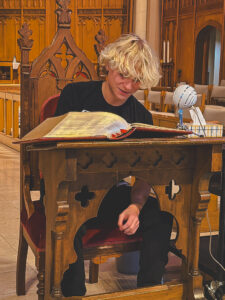
This June, I spent a week at the Episcopal Summer camp at Camp Wood, YMCA as a first-time counselor. Since leaving, I’ve had several dreams in the CWCU (Camp Wood Cinematic Universe). In one dream, I was building a shrine in my cabin when I lost track of time. I was hanging friendship bracelets, ornaments, and candles as the rhythm of camp buzzed all around. I suddenly realized I was missing dinner because I heard the camp cleanup song yelled from a distance. I ran through the camp, which was now under blizzard conditions. I ice-picked up the limestone steps and scaled the slippery stair rail leading into the dining hall. It was like a scene from National Treasure. I woke up as soon as I saw my family group, sitting at our table. I was so close to being back. Time says that snow will have to fall on the prairie before we can be at Camp Wood together again.
Camp felt big. Big like the early Celtic Church, which worshipped outside under giant stone crosses. It has been about three years since I began exploring the Episcopal expression of the Christian faith. I knew it was time to go to camp to see the magic everyone had gone on about and to learn what we were teaching youth. I was moved as soon as Reverend Karen gave her sermon during staff training—how each generation is connected, how we are all linked by love. She went around the room naming individual staff members and sharing each person’s rich history with the program. The relationships built within this diocese, which begin at or are strengthened by Camp, are enough to sustain a meaningful life.
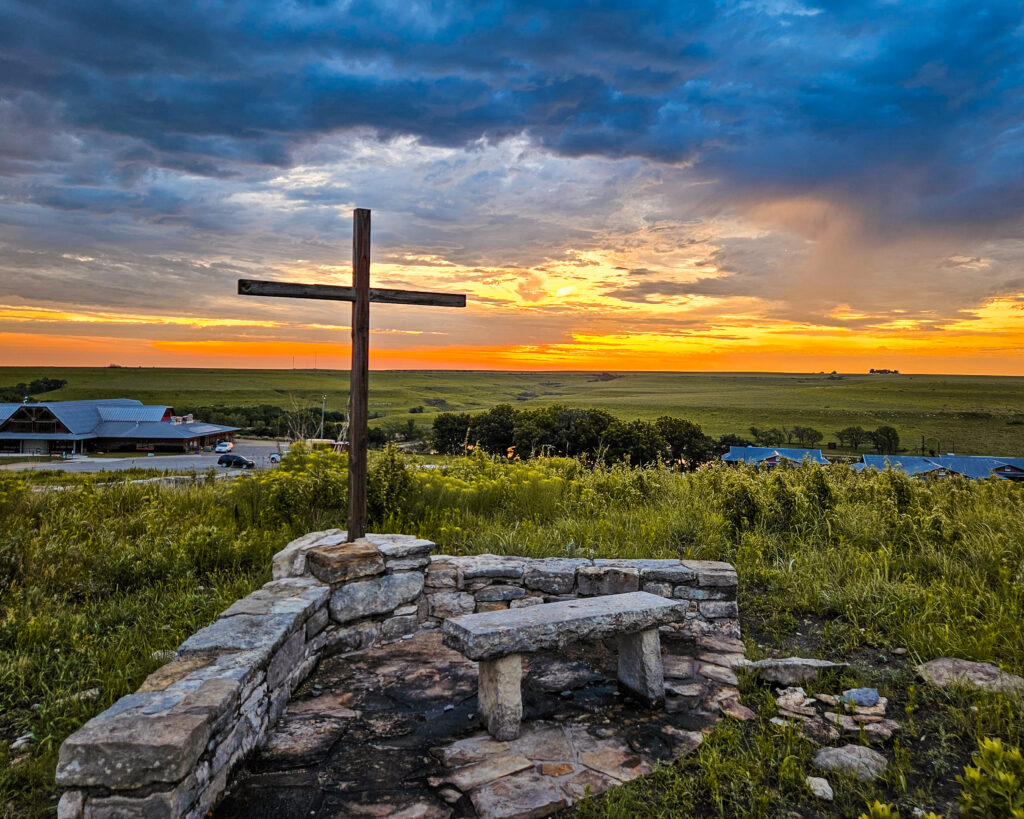
I cry in church. We can only make gestures at the magnitude of God’s love, and it’s only ever a best effort. I tend to focus on who is outside the doors because I was once that person. I don’t believe in an us vs. them Creator. I believe God speaks to each of us in unique ways and the best we can do as a Church is to create many avenues to experience this love. I’m interested in a God that is bigger than our buildings. I caught a glimpse of that God at camp. God had space in the amphitheater of the Flint Hills.
Young people who may have felt homesick or had difficulty acclimating to camp at the beginning made close friends and even made plans to return next year by the end of the week. As a staff, we worked together to care for people’s needs throughout camp. We sought to put our campers and fellow staff members’ needs before our own. The last were made first.
After my experience at Camp, I feel connected to a tradition that spans generations. Transitioning back into “normal” life with camp lessons and memories held close, I am more certain of my connection to the whole. Karen said during her sermon, “When tears come, I know that God is close.” At Camp Wood, God feels close.
by Marley Hays
 835 SW Polk St.