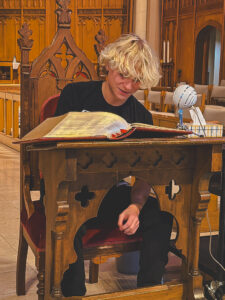
Breakthrough Episcopal Social Services is founded on a clear and faithful conviction that human connection heals and is not only a privilege for those who are stable or prosperous, but it is a basic need shared by all. We live in a time when loneliness has reached historic levels, and rates of depression and suicide continue to rise. Disconnection, isolation, and fractured trust are not only social problems but also spiritual ones. In response, the Church is called to bear witness to an alternative narrative, one in which presence matters, community heals, and no one is left to suffer alone.
This story traces such a journey, from isolation to belonging, from survival to dignity, and from the margins back into community and a place to call home.
For more than twenty-seven years, Michael lived outside unhoused, unheard, and largely unseen. Living with a Serious Mental Illness (SMI), he navigated a world that moved too fast and demanded too much from someone whose inner life was already complicated. Little is known about his life before becoming unhoused. What is known is that, over time, he slipped through every available safety net.

Michael’s name appeared on the hardest-to-serve chronic homelessness registry year after year. Outreach workers knew it well. Many agencies attempted to help, but progress was rare. Michael often declined housing and did not trust the systems meant to support him.
A breakthrough came in the summer of 2025, not through a new program or policy, but through a relationship.
Michael began working with one of Breakthrough’s Housing Peer Support Specialists. Housing peer support is rooted in lived experience with substance use, homelessness, disability, or mental health challenges and centers empathy, mutual understanding, and hope. Through one-on-one accompaniment, peer specialists help individuals navigate housing systems, build stability, and reconnect with the community that they have been disconnected from.
The first encounters were intentionally simple. No paperwork, work, or applications to fill out. No pressure to comply. Just presence. Most days, Michael sat outside the Clubhouse, resting on the sidewalk or a nearby bench. Coffee became a sacred, quiet ritual. Sitting together became the work. Some days, he talked freely; other days, silence filled the space.
Michael’s speech often blurred the line between reality and disorganized speech. On different days, he called his peer support specialist by different names or spoke of shared experiences that had never occurred. Rather than correcting him, she listened. Trust cannot be demanded; it must be rebuilt slowly, especially for someone whose life has been shaped by repeated relational ruptures and trauma. Being heard mattered more than being right. Being seen mattered more than being efficient. As trust grew, routines followed. Familiar faces. Shared meals. Brief conversations that slowly lengthened. When challenges arose, longtime Breakthrough Clubhouse members and staff offered mutual support and patience, reminding the peer support specialst that healing unfolds at its own pace.
Before housing was ever possible, Michael found something else at the Clubhouse: a community where he could begin to feel safe again, free from the stigma that so often marginalizes people living with mental illness. He has been a member for over 10 years, and none of the staff can remember a time when he was stably housed or even open to the idea. We often left the office on a cold night, afraid of what might happen to Micheal overnight and of we would see him again.
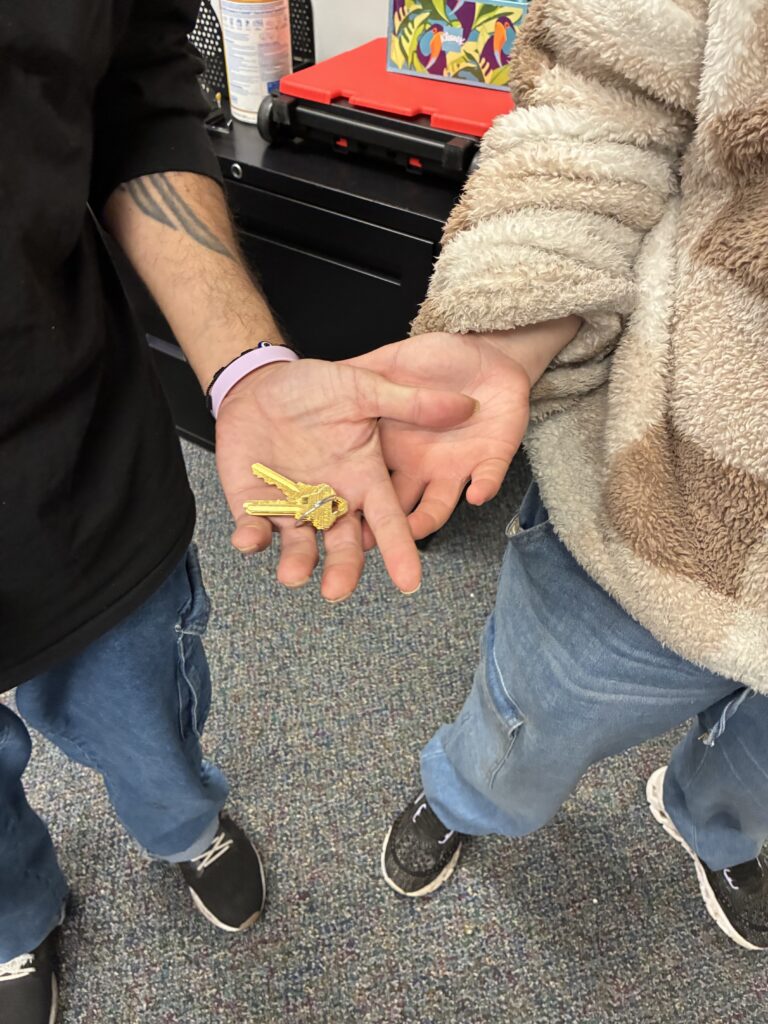
Breakthrough ESS is more than a social service organization; it is an inclusive, supportive community. Where people feel a sense of family, and lifetime friendships are developed. Every member lives with mental illness, creating an environment of mutual understanding and shared dignity. Disorganized thoughts, missed days, and slow progress are not grounds for exclusion or disqualification; they are part of the shared reality. At the Clubhouse, members are wanted, needed, and expected to contribute, which builds self-worth and confidence.
Michael was not corrected, dismissed, or overlooked. He was greeted by name. He was noticed. His presence matters, and he always brings quite a bit of optimism, resilience, and joy. The community remained steady even when he could not, and when the broader world had given up on him. Over time, this consistency began to restore something deeply damaged: trust. Trust that others would remain and not harm him. Trust that the community could be relied upon. Trust that he truly belonged. After months of steady engagement, Michael began to speak openly about housing.
For the first time in decades, he expressed readiness. The path forward was not simple. Identification had to be secured. Income had to be clarified. Each step required patience and accompaniment. With encouragement, Michael obtained a low-barrier city ID through a City of Wichita program designed to help residents access services. Eventually, previously inaccessible disability benefits were uncovered, and a local property management company agreed to meet Michael where he was, accepting several months of rent up front, and finally, after 27 years, Michael moved into his own apartment. It was furnished modestly, just enough to make it livable and dignified. And then, something holy happened.
Michael rested.
For weeks, he slept more than he was awake. His body, no longer in constant fight or flight, finally released years of accumulated exhaustion and trauma. This rest was not avoidance or isolation; it was repair. It marked the first step in a longer journey toward stability, health care, routine, and renewed participation in his community.
None of this happened in isolation. The Clubhouse and its community remained his anchor.
Trauma often begins in broken relationships and deepens through isolation. Healing, therefore, requires the slow restoration of trust, safety, and social connection. This is where faith communities have a unique and vital role to play. The Church is called to prioritize presence over performance, meeting people as they are and remaining steady even when progress is uneven. Our theology and liturgy are embodied through compassion, patience, and hope.
Today, Michael continues to return to the Clubhouse. It is where he is wanted, needed, and expected. It is where he belongs.
When asked how it feels to finally have a home, he looks around his apartment and answers quietly:
“It’s good,” he says.
“Real good. I ain’t outside anymore.”
Sometimes, that is all that needs to be said.
As a new year begins, rather than setting resolutions, let this story inspire us to choose an intention: to connect. In a world marked by loneliness and division, the Gospel calls us to draw near to those on the margins of our neighborhoods, not with quick answers or easy fixes, but with compassionate presence. Connection begins by noticing, remembering a name, listening deeply, and remaining when the journey becomes complicated. When we choose relationship over resolution, we reflect the God who draws close to our suffering, makes room for all, and reminds us that no one is meant to be alone.
For the Poor and the Neglected
Almighty and most merciful God, we remember before you all poor and neglected persons whom it would be easy for us to forget: the homeless and the destitute, the old and the sick, and all who have none to care for them. Help us to heal those who are broken in body or spirit, and to turn their sorrow into joy. Grant this, O God, for the love of your Son, who for our sake became poor, Jesus Christ our Lord. Amen. BCP (1979), page 826
Thank you for your support and for helping us transform lives and communities in the name of Chirst.
Grace and Peace,
For more information on Breakthrough ESS and to donate vist https://www.breakthroughwichita.org/donate/
Or Breakthrough Episcopal Social Services
P.O. Box 670
Wichita, KS 67201
 835 SW Polk St.