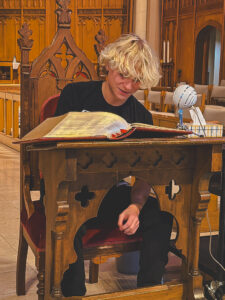
For urban Kansans like me, going to camp may feel like an absolute retreat into wilderness. Nestled away in the Flint Hills, I was in awe of the beautiful prairie landscape that surrounds Camp Wood. For one week, 197 students, a significant increase from last year, came together from across Kansas and Missouri to experience wilderness. This year’s camp theme “In the Wilderness” drew our attention to how God remains present in our wilderness moments.
As a summer intern, I’ve gotten the chance to assist with preparing for camp. However, even as I assembled materials and listened to others’ favorite camp stories, I knew I would not fully understand Mega Camp until experiencing it for myself. Being my first time at Mega Camp as a Junior High counselor and first time ever at an Episcopal camp, the week was also a wilderness for me of new experiences and challenges. While at times camp can feel like chaos as the comforts of our home life routines are interrupted and plans change due to rain, it is the connections we build with one another that make it all so worth it.
I found myself resonating to this theme of wilderness as a young person growing up in an increasingly polarized and confusing world. Whether one is beginning middle school or graduating college, changes around us seem to happen too fast. As if these life transitions were not enough to challenge us, we are constantly reminded by the unstable political realities on our phones each day. Our prayer book acknowledges this reality for young people in its prayer titled “For Young Persons” (BCP 829) which starts with, “God our Father, you see your children growing up in an unsteady and confusing world”. Amidst the uncertainties and even fear that wilderness brings, camp reminds us of God’s continuous presence all around us. In the seasons of wilderness and transition in our lives, God continues to work in and through us.
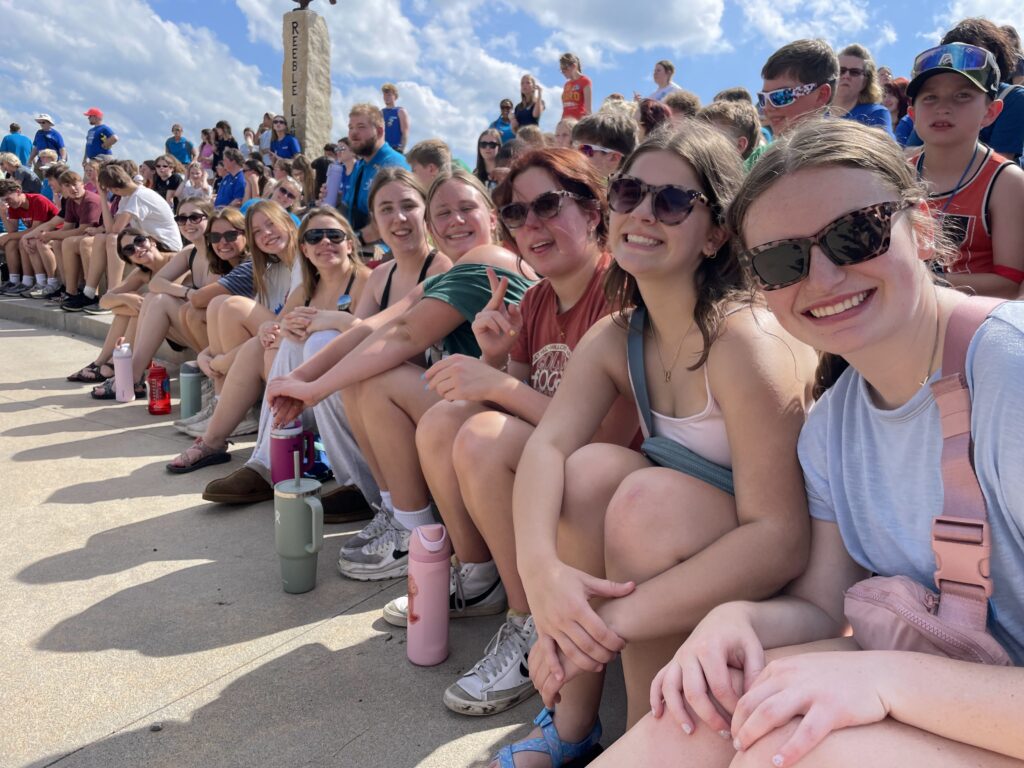
In the wilderness of Mega Camp, as the distractions of my outside life was set aside, I was more able to notice God’s evolving work amidst youth ministries in our church. I learned how camp is an anchor to so many youths across the diocese. Most campers come from Episcopal churches with few other members their age and many do not attend one of our churches at all. At camp, I saw long standing friendships reunited and many new friendships blossom. I saw campers willing to engage in difficult conversations with one another as they process why their faith is meaningful to them. Camp brings deep and important connection in our diocese when we are otherwise spread far apart.
Not only does camp provide friendship and community, but it also allows students and young people opportunities to practice leadership. For example, at camp, elections are held for Youth Commission, a student-led group that helps plan youth events around the diocese. Additionally, on Wednesday night, five graduating seniors gave the message during Mega Eucharist, when all campers and staff come together for worship. Of course, campers are not the only ones learning to be leaders. Young adults like me learn to be leaders at camp in a new capacity as counselors. These are just a few of the ways that Mega Camp invites young people to be challenged in new ways as leaders of the church.
As an Episcopal convert and someone who did not grow up going to Episcopal summer camp, I am proud to see and learn how our diocese works to create an inclusive and meaningful space for young people. Mega Camp creates boundary-crossing relationships where there would otherwise not be for an often-overlooked age group in our church. I am excited to continue to see how God uses our gifts to uplift children, youth, and young adults in the Diocese of Kansas.
by Zachariah Clark
Summer Youth Ministry Intern
Episcopal Diocese of Kansas
 835 SW Polk St.